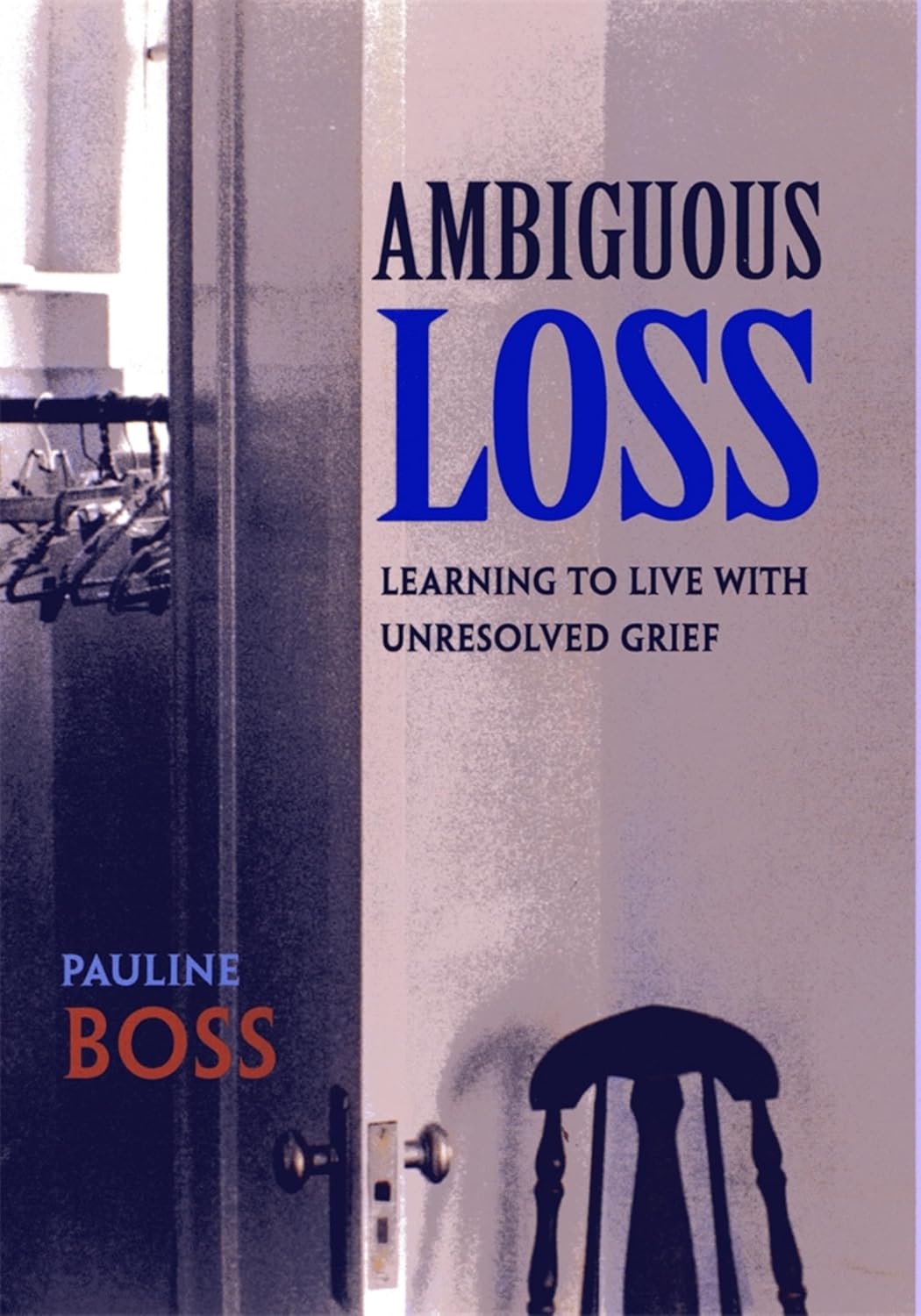
Some losses are hard to grieve because no one knows what to call them.
Ambiguous Loss by Pauline Boss gives language to that kind of pain.
I am recommending this book because so many people carry losses that are unclear, unresolved, or difficult for others to recognize. The person may be physically present but emotionally absent. A family may look intact from the outside while something essential is missing inside. A relationship may continue, but the bond you needed may never fully arrive. A childhood may contain food, shelter, and appearances, while the emotional home was not really there.
That kind of grief is lonely.
It is also real.
Why this book matters
Clear losses are painful enough. Ambiguous losses add another wound: uncertainty.
When a loss is obvious, the world may at least know how to respond. People bring food. They name the death. They understand why you are grieving. They may not say the right thing, because humans are gifted at accidentally stepping on emotional furniture, but at least the loss has a name.
Ambiguous loss is different.
The grief may have no public ritual. No one may validate it. The person you lost may still call, visit, sit at the table, send texts, or appear in family photos. The marriage may still exist. The parent may still be alive. The sibling may still be around. The child may still be reachable. The family story may insist that nothing serious happened.
And yet something important was absent.
That is the ache Boss helps name.
Emotional absence is still absence
One of the most important gifts of this book is that it can help you trust grief that other people may not understand.
Many people grieve a parent who was there but not emotionally available. A partner who stayed but did not really meet them. A family that functioned but did not know how to attune. A relationship that had loyalty but little tenderness. A home that looked normal but required self-erasure.
This kind of loss can be maddening because it is hard to prove.
You may hear yourself saying, “It was not that bad.”
Or, “Other people had it worse.”
Or, “They did their best, so why do I still feel this?”
Those questions deserve compassion, not contempt.
Good enough care can coexist with real absence. Love can coexist with limitation. A person can have meant well and still have missed you in ways that shaped your life.
Naming that is not cruelty.
It is mourning.
How this connects to abandonment depression
Ambiguous loss often lives close to abandonment depression.
When the loss was unclear, the grief may not have had a place to go. The pain gets carried under the surface. It may become anxiety, numbness, overfunctioning, people pleasing, anger, compulsive caretaking, perfectionism, spiritual bypassing, dissociation, or the false self adaptation that keeps everything looking manageable.
The defenses do not form because the person is dramatic.
They form because unresolved grief needs somewhere to live.
If the child could not say, “I am lonely with you,” the child may become useful, compliant, impressive, funny, invisible, responsible, or detached.
If the adult cannot say, “Something is missing here,” the adult may become resentful, over-adapted, shut down, or quietly despairing.
Ambiguous loss gives a name to the missing thing that has no easy courtroom evidence.
That matters.
The soul often heals more honestly when the grief is allowed to have a name.
When this book may help
This book may be especially useful if you are grieving something others minimize because the situation looks fine from the outside.
It may help if you have lived with family complexity, emotional absence, estrangement without clean closure, a relationship that never became what it promised, a parent who was physically present but psychologically unavailable, or a bond that remains confusing because love and loss are tangled together.
It may also help if you are trying to understand why you still feel grief when the person, family, or relationship technically remains part of your life.
That is one of the hardest forms of mourning.
You are grieving what was missing while still having to relate to what remains.
How to read it
Read Ambiguous Loss slowly.
Do not turn it into a trial where you prosecute your past or defend everyone in it. Both moves may keep you away from the grief.
Let the book help you name what was unclear.
Notice where you feel relief. Notice where you feel resistance. Notice where you want to say, “But it does not count.” That sentence may be standing guard at the entrance to a very old sorrow.
You do not need to exaggerate the loss in order to honor it.
You do not need to erase the love in order to grieve the absence.
You do not need a perfect verdict in order to begin mourning what was not there.
Three doorways to notice
The loss that had no name. Pay attention to the grief you have minimized because it did not look like a clear loss from the outside.
The person who was there and not there. Notice where physical presence, role, duty, or family identity hid emotional absence.
The grief beneath adaptation. Ask where your defenses may have formed around a missing relationship, missing attunement, or missing permission to be real.
Why it belongs on the Real Self shelf
The Real Self often begins to emerge when the person can tell the truth about what was missing without collapsing into blame or self-attack.
That is delicate work.
Ambiguous loss does not give you a neat ending. That is the point. Some grief does not resolve by becoming simple. Some grief becomes livable when it becomes nameable.
Boss’s work helps make room for that kind of mourning.
And when mourning has room, defenses do not have to carry quite so much alone.
Questions to Consider
- What loss in your life has been difficult to name because the situation looked fine, normal, or unresolved from the outside?
- Where have you minimized emotional absence because someone was physically present or technically still in your life?
- What defense may have formed around grief that had no clear place to go?
A Small Practice
Write one sentence that begins: “The loss I have had trouble naming is...” Then write one sentence that begins: “What I needed but could not fully receive was...” Keep the sentences simple. Let them be true enough for today.
Clinical note: This reading feature is educational and reflective. It is not a diagnosis, crisis care, or a substitute for psychotherapy, medical care, or individualized professional support.